This site has limited support for your browser. We recommend switching to Edge, Chrome, Safari, or Firefox.

Take Control

Recover Anywhere

Move Freely

Relieve Instantly

Cart 0

Congratulations! Your order qualifies for free shippingYou are $100 away from free shipping.
No more products available for purchase

Products
Subtotal Free
Shipping, taxes, and discount codes are calculated at checkout
Save On Bundles · 15-Day Money-Back Guarantee
Practitioner-Designed · Clinically Informed

The Science
Behind Real
Relief

Designed by a sports chiropractor with decades of clinical experience, Tri-Aid targets the suboccipital muscles — the single most overlooked source of tension headaches and neck pain.

See the Science
1000s
Trusted Users
3
Target Zones
100%
Battery-Free
★ Kelly Slater Uses This
🟢
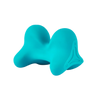
Tri-Aid
The world's only self-massage tool engineered specifically for the suboccipital muscles
Small & Portable 100% Silicone Fly-Friendly Practitioner-Made
🏥 Designed by a Sports Chiropractor
🔬 Clinically-Informed Design
✈️ 100% Fly-Friendly
♻️ 100% Recyclable Silicone
🛡️ 15-Day Money-Back Guarantee

Neck pain & headaches aren't just surface level

Most people with chronic neck pain, tension headaches, or upper back tightness spend years cycling through treatments — without ever addressing the root cause.

The real culprit is almost always the suboccipital muscles — four small, deep muscles at the base of your skull. When tight, they cause headaches, stiffness, and referred pain spreading into your jaw, temples, and upper back.

Most massage tools are simply too blunt, too big, or not shaped to reach them. Until now.

  • Standard foam rollers can't access the suboccipital region
  • Tennis balls offer no precision or anatomical stability
  • Generic massage guns create surface vibration, not deep pressure
  • Manual therapy costs $80–$150 per session, every week
  • Most devices need charging, maintenance, or two hands

Anatomy of the Problem


Suboccipital Muscles — Primary
4 deep muscles at the skull base. The #1 source of tension headaches. Missed by virtually all consumer tools.

Upper Trapezius
The muscle most people feel as shoulder tension. Refers pain upward into the neck and skull.

Levator Scapulae
Connects the neck to the shoulder blade. Often tight in desk workers causing that "stuck" feeling.

Thoracic Erectors & Glutes
Secondary zones addressed by Tri-Aid's Side B for whole-body release.

What research says about trigger point release

Myofascial trigger point therapy has decades of clinical evidence behind it. Here's why Tri-Aid works at a physiological level.

Research 01
🧠
Suboccipital Trigger Points & Headache
The suboccipital muscles are among the most common sources of cervicogenic headache. Sustained pressure on these trigger points significantly reduces headache frequency and intensity.
Journal of Manipulative and Physiological Therapeutics — Cervicogenic Headache Research
Research 02
🔬
Ischemic Compression Mechanism
Sustained pressure causes temporary ischaemia, followed by reactive hyperaemia — flushing out pain-producing metabolites and reducing muscle hypertonicity. This is exactly what Tri-Aid delivers.
Travell & Simons — Myofascial Pain and Dysfunction (Vol. 1 & 2)
Research 03
🏃
Recovery & Athletic Performance
Myofascial release before and after training improves range of motion, reduces DOMS, and enhances neuromuscular performance. Athletes recover faster between sessions.
International Journal of Sports Physical Therapy — Self-Myofascial Release Review
Research 04
🖥️
Desk Work & Forward Head Posture
Forward head posture increases load on suboccipitals by 4–5× for every inch of head displacement forward. Regular deactivation of these trigger points is essential for desk workers.
Surgical Technology International — Effects of Forward Head Posture on Neck Load
Research 05
💆
Self-Applied vs. Clinician-Applied
Studies comparing self-administered trigger point compression with clinician-applied treatment show comparable outcomes when the device delivers adequate precision and anatomical targeting.
Journal of Bodywork & Movement Therapies — Self-Treatment Outcomes
Research 06
📐
Why Geometry Matters
Tri-Aid's Side A tip spacing of 4cm mirrors average suboccipital condyle spacing — enabling bilateral contact simultaneously. No other consumer tool achieves this precision.
Source: Tri-Aid Clinical Design Documentation

Three sides. Infinite applications.

01
Place It
Position on any flat surface — floor, bed, or wall. No setup. The non-slip base ensures stability in any position.
02
Find Your Point
Gently lower the target area onto the device. You'll feel focused pressure — not sharp pain. Let your body weight do the work.
03
Apply & Hold
Sustain pressure for 30–90 seconds per point. You'll feel a "release" — warmth, softening, or a melting sensation as the muscle lets go.
04
Work the Body
Use Side A for neck/skull base, Side B for back, glutes, and quads. A complete session takes just 5–10 minutes.
Side A — Primary
Suboccipital / Cervical
Precision geometry with a 4cm point-to-point distance and 6cm apex-to-apex width — designed to achieve bilateral suboccipital contact simultaneously. No other consumer tool achieves this.
Point spacing: 4cm · Apex width: 6cm · Target: Suboccipital, Rectus Capitis, Obliquus Capitis
Side B — Secondary
Full Body Trigger Points
Broader, rounded tip profile handles everything below the skull base — thoracic spine, lumbar erectors, piriformis, glutes, quads, calves. One tool for your entire body.
Targets: Thoracic · Lumbar · Glutes · Quads · Calves · Shoulders

Built for every body. Trusted by the best.

💻
Tom, 35
Marketing Professional
Spends most of his week behind a desk — hunched over a laptop, shoulders tight, posture suffering. Every weekend he tries to surf, but paddles out stiff and unable to move freely.
"I'd paddle out stiff as a board. Tri-Aid became my morning reset."
🏊
James, 26
Elite Triathlete
Chasing international qualification, James needs every marginal gain. Persistent niggles and tightness kept him just shy of his potential. He'd tried every tool — most too bulky, too expensive, too shallow.
"It hits spots other tools miss — and I can pack it in my race bag."
🌸
Sarah
Chronic Pain Sufferer
Years of expensive appointments, temporary relief, and flare-up cycles. Sarah needed something she could use on her own terms, at home, whenever tension crept in.
"A few minutes a day. No appointments. No guilt. Just calm."

Thousands of people. One result.

★★★★★
"I suffered terrible headaches my whole adult life and have been dealing with a lumbar injury for 3 years. This thing is a miracle."
👩
Sydney Customer
Chronic headache & lumbar injury
✓ Verified Purchase
★★★★★
"Using it on my neck, glutes, and calves. Great product. Highly recommend. Does exactly what it says."
🏃
Sydney Athlete
Runner & weekend warrior
✓ Verified Purchase
🏄
★★★★★
"When on the road, Tri-Aid is always in my bag. Compact, effective, and never needs charging — the perfect recovery tool for travel."
Kelly Slater
11× World Surfing Champion
✓ Verified User

Every detail has a clinical reason.

01
Precision Suboccipital Geometry (Side A)
4cm point-to-point distance and 6cm apex-to-apex width reflect the average anatomical spacing of the suboccipital condyles. Side A achieves correct bilateral compression the moment you position it — no guesswork.
Why it matters: Most tools never actually reach the suboccipital layer — they compress the larger superficial muscles and deliver partial relief. Tri-Aid's geometry bypasses that problem by design.
02
100% Recyclable Medical-Grade Silicone
The durometer (hardness) of Tri-Aid's silicone is carefully selected to deliver deep pressure without being uncomfortable. It gives slightly under load — mimicking a practitioner's thumb — rather than rigid plastic or wood tools.
Why it matters: Trigger point therapy requires moderate-to-firm pressure — not pain. Too hard and you'll guard against it. Too soft and you won't reach the target tissue. The silicone formulation hits the therapeutic window.
03
Compact, Portable, Fly-Friendly
12 × 8 × 9cm and under 400g — fits in a gym bag, travel bag, or carry-on without issue. 100% fly-friendly (no batteries, no liquid, no electronics). Used by Kelly Slater in his travel bag.
Why it matters: Consistency is the biggest factor in recovery outcomes. If your tool can't go where you go, your routine breaks down. Tri-Aid's portability removes that barrier entirely.
04
Zero Batteries. Zero Charging. Zero Maintenance.
Tri-Aid requires no power source, no app, no subscription, and no maintenance. It works instantly, every time — whether it's been in your bag for a month or you just took it out of the box.
Why it matters: Electric devices fail at the worst times — dead batteries, forgotten chargers, low-power modes. Tri-Aid's mechanical simplicity is a feature. It will work exactly as well in 10 years as it does today.

Questions? We've got answers.

Can Tri-Aid actually treat tension headaches?
Yes. Tri-Aid's primary design purpose is to target the suboccipital muscles — the most common anatomical source of cervicogenic and tension-type headaches. Regular use can significantly reduce both frequency and intensity.
How is it different from a foam roller or tennis ball?
Foam rollers are for superficial release and can't reach the suboccipitals. Tennis balls have no precision geometry and can't achieve bilateral contact simultaneously. Tri-Aid is engineered specifically for anatomical accuracy.
How much pressure should I use?
You should feel meaningful pressure — not sharp pain. Avoid use if you experience pins and needles, tingling, or numbness. Most people find a "good hurt" sensation followed by a release within 30–90 seconds.
How often should I use it?
Daily use is safe and encouraged. Many users do a 5–10 minute session each morning. For chronic pain, daily use is recommended for the first 2–4 weeks. Athletes use it pre- and post-training.
Is it suitable for people with existing injuries?
Tri-Aid is designed as a self-massage tool for healthy individuals and those managing common muscular conditions. If you have a diagnosed spinal condition or recent surgery, consult your healthcare provider first.
What's the return policy?
Tri-Aid comes with a 15-day no-questions-asked money-back guarantee, as long as the product is returned in new condition. We believe in the product — try it risk-free.
🔥 Limited Time — Save $36

Take Control
of Your Pain Today

Join thousands of Australians who've found the relief they'd been chasing for years. Try it completely risk-free.

See How to Use
15-Day Money Back · ✓ Free Australian Shipping On Bundles · ✓ No Batteries · No Subscriptions